3K 200g Carbon Fiber Fabric for Drone and UAV Manufacturing
3K 200g Carbon Fiber Fabric for Drone and UAV Manufacturing
Selecting the right carbon fiber reinforcement requires careful evaluation of mechanical properties, areal weight, and supply chain reliability. 3K 200g carbon fiber fabric has become a go-to specification for manufacturers seeking reliable structural performance with the flexibility of a mid-weight fabric. Drawing from production data and industry standards, this article provides actionable guidance for engineers, purchasing managers, and composite manufacturers.
Weave Patterns: Plain vs Twill for 3K 200g Fabric
The weave pattern fundamentally determines the drape characteristics, face appearance, and mechanical performance balance of the finished laminate. For 3K 200g carbon fiber fabric, two weave patterns dominate the market: plain weave and 2×2 twill weave. Each offers distinct advantages that make it more suitable for specific manufacturing processes and end-use applications.
Plain Weave Construction
Plain weave alternates warp and weft yarns in a simple over-one-under-one pattern, creating a checkerboard appearance. This is the most stable weave architecture, meaning the fabric resists distortion and maintains its shape during handling and cutting. Plain weave 3K 200g fabric excels in applications requiring dimensional stability, flat panel production, and where the fabric must maintain precise alignment during automated layup processes. The trade-off is reduced drapability: plain weave is stiffer and less conformable than twill, making it more challenging to lay over complex three-dimensional mold surfaces without wrinkling or bridging.
In our production experience, plain weave 3K 200g carbon fiber fabric is most commonly specified for flat panel applications such as automotive interior trim, architectural wall panels, electronic equipment housings, and flat structural reinforcement plates. The fabric attains slightly higher mechanical attributes in the warp direction compared to twill weave due to less yarn crimp, though the difference is typically less than 5% and often within manufacturing tolerance.
2×2 Twill Weave Construction
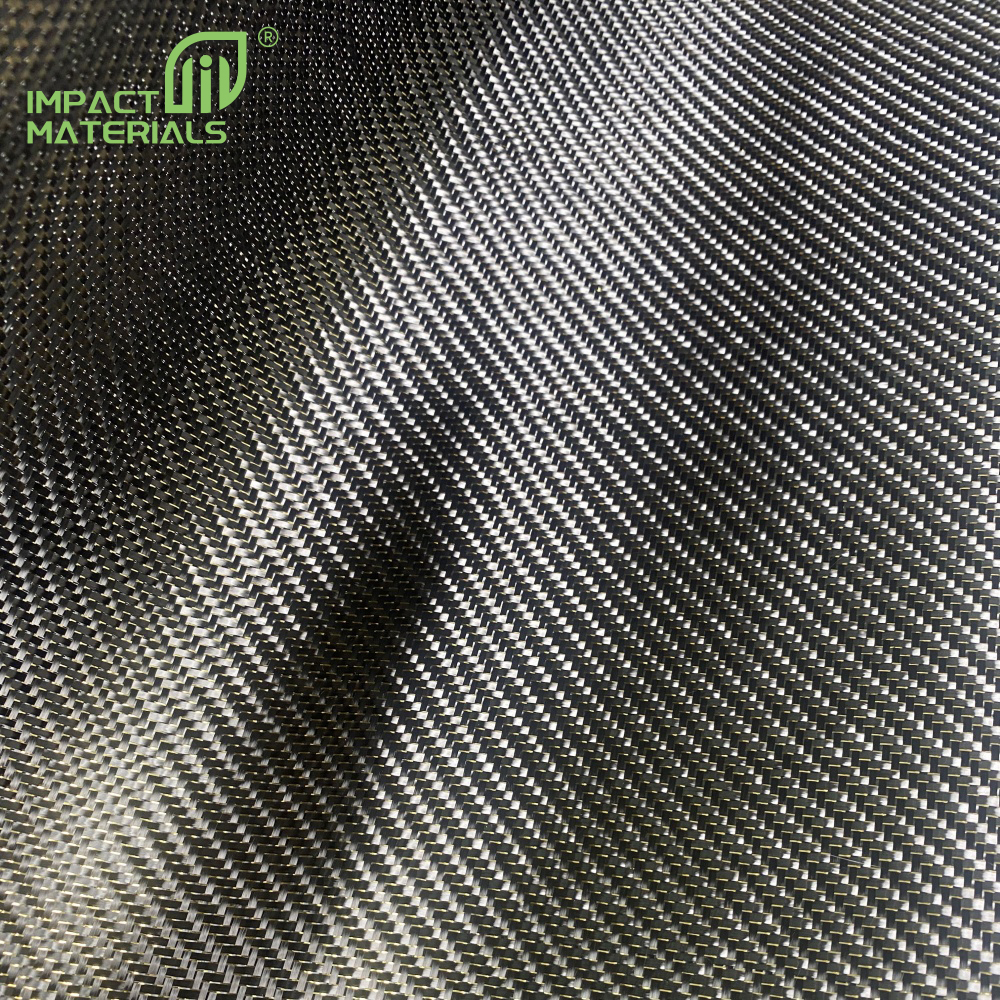
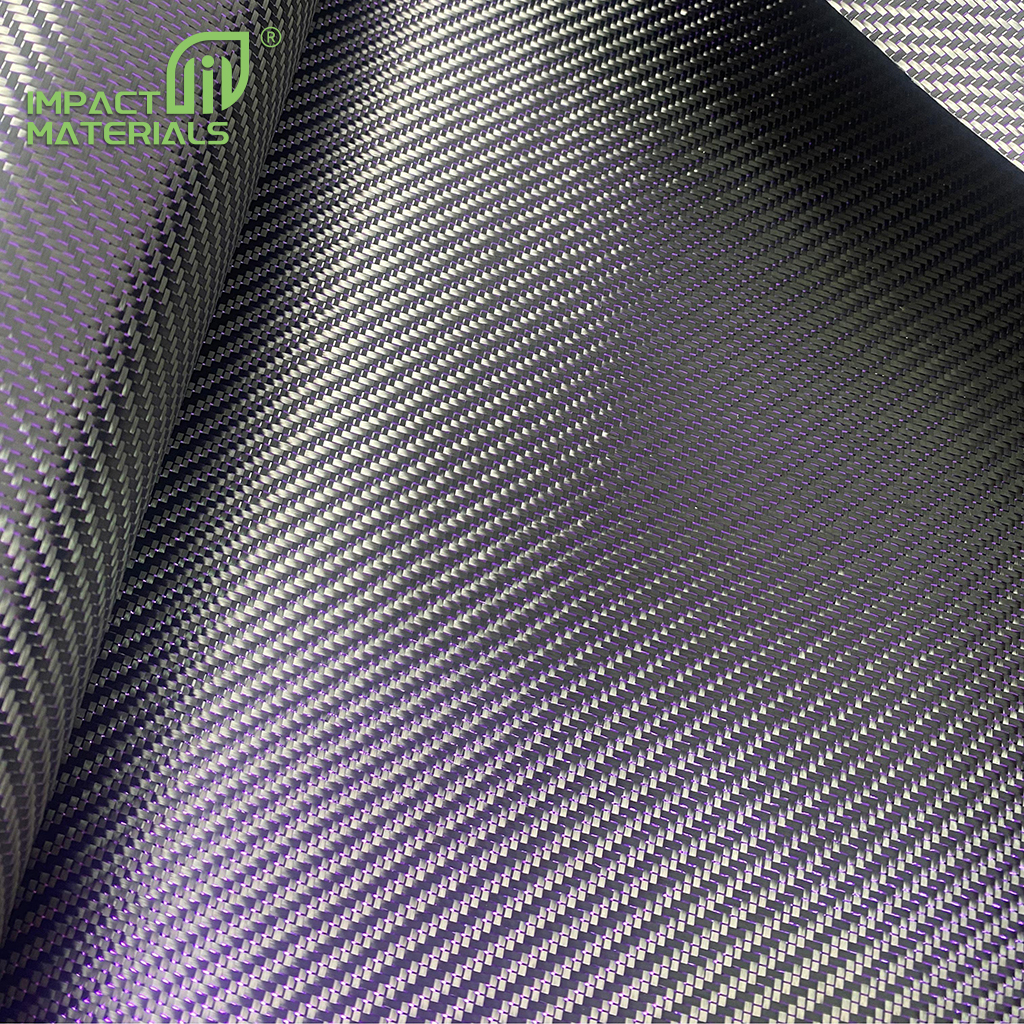
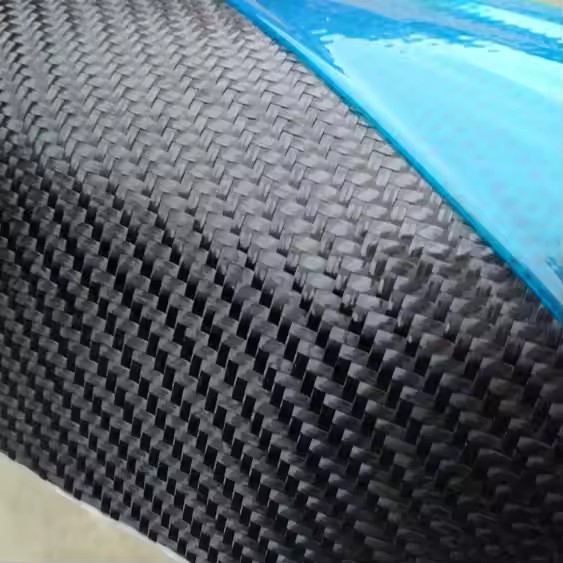
2×2 twill weave creates the characteristic diagonal pattern that most people associate with carbon fiber appearance. Each weft yarn passes over two warp yarns, then under two, creating a repeating diagonal pattern at approximately 45 degrees. This architecture provides significantly better drapability than plain weave, allowing the fabric to conform to complex mold geometries including compound curves, deep draws, and tight radii. The enhanced drapability comes from the longer float length of the yarns, which allows them to shift position relative to each other more easily during layup.
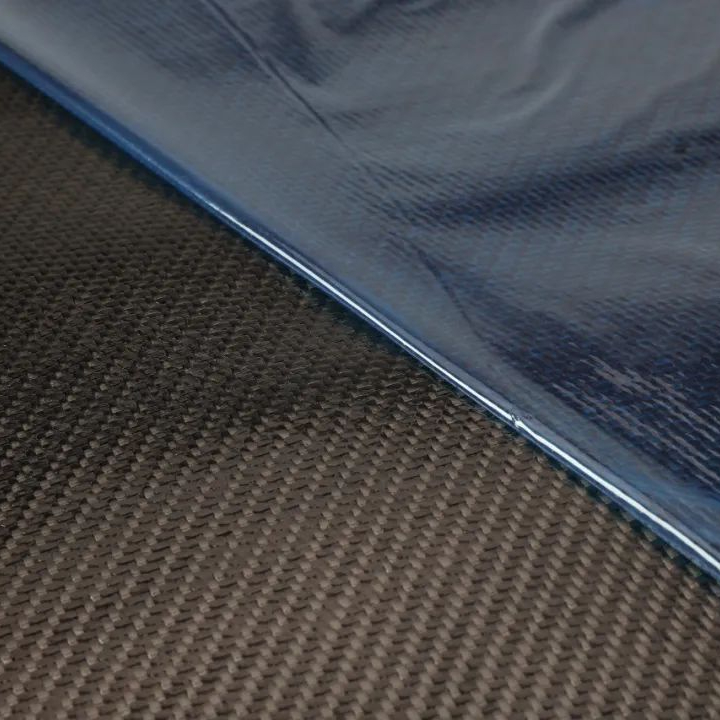
Impact Materials supplies High-strength Carbon Epoxy Prepreg Cloth Fabric 3K 200g 2×2 Twill Weave as one of our most popular specifications, particularly for automotive exterior panels, sporting goods, and marine applications where both aesthetics and structural performance matter. The twill weave produces the signature carbon fiber visual appearance that consumers recognize and associate with high-performance products.
Weave Selection Guidelines by Application
- Automotive body panels and exterior trim: Twill weave preferred for drapability over compound curves and premium visual appearance
- Flat structural panels and reinforcement plates: Plain weave offers dimensional stability and slight mechanical advantage
- Marine hull construction: Twill weave for complex hull geometries; plain weave for flat deck sections
- Aerospace interior components: Both weaves used depending on part geometry; plain weave for flat floor panels, twill for curved fairings
- Sporting goods (bicycle frames, racquets): Twill weave dominates due to complex tube geometries and consumer preference for the twill visual pattern
- Wind turbine blade skins: Twill weave or biaxial non-crimp fabric (NCF) for large curved surfaces
- Industrial tooling and molds: Plain weave for dimensional stability and flat accuracy
Featured 3K 200G Carbon Fiber Fabric Products
Explore our top-rated 3K 200g carbon fiber fabric products from Impact Materials, trusted by manufacturers in 120+ countries.
Technical Traits and Specifications
Understanding the fundamental mechanical properties of 3K 200g carbon fiber reinforcement is essential for engineers and procurement professionals evaluating material suitability for specific implementations. The material delivers a tensile strength in the range of 3,500-4,500 MPa when tested according to ASTM D3039, with a tensile modulus of 230-250 GPa. The fiber density remains consistent at approximately 1.76 g/cm3, which translates to a significant weight advantage over metallic alternatives: carbon fiber composites achieve roughly five times the strength-to-weight ratio of structural steel.
The elongation at break ordinarily falls between 1.5% and 1.8%, providing sufficient ductility for most composite layup processes while maintaining structural rigidity. For thermal applications, 3K carbon fiber fabric demonstrates a coefficient of thermal expansion (CTE) near zero in the fiber direction, making it ideal for precision components subject to temperature variations. The fabric maintains its mechanical properties across a service temperature range of -60 degrees Celsius to +150 degrees Celsius for standard epoxy matrices, and up to +200 degrees Celsius when paired with high-temperature resin systems such as bismaleimide (BMI) or cyanate ester.
Tensile and Compressive Performance
According to ASTM D3039 tensile testing standards, a typical 3K 200g carbon fiber fabric laminate at 60% fiber volume fraction achieves the following baseline properties. These values represent standard epoxy resin systems with room-temperature curing; actual performance varies with resin selection, layup sequence, and curing conditions.
| Property | Typical Value | Test Standard |
|---|---|---|
| Tensile Strength | 3,500 – 4,500 MPa | ASTM D3039 |
| Tensile Modulus | 230 – 250 GPa | ASTM D3039 |
| Compressive Strength | 1,200 – 1,600 MPa | ASTM D6641 |
| In-Plane Shear Strength | 50 – 70 MPa | ASTM D3518 |
| Interlaminar Shear Strength | 60 – 80 MPa | ASTM D2344 |
| Elongation at Break | 1.5 – 1.8% | ASTM D3039 |
| Fiber Density | 1.76 g/cm3 | ISO 10119 |
| Areal Weight | 195 – 205 g/m2 | ISO 3374 |
Weight Class Comparison: 150g vs 200g vs 300g
Selecting the correct areal weight is one of the most consequential decisions in composite design. The 200g specification occupies the middle ground between ultra-lightweight 150g fabrics, which prioritize weight savings for non-structural cosmetic applications, and heavier 300g fabrics, which maximize laminate thickness per ply for structural applications. In our experience working with automotive and aerospace clients, 3K 200g fabric provides the best balance for the majority of semi-structural components: it builds laminate thickness efficiently (typically 0.25mm per cured ply), handles well during layup, and achieves fiber volume fractions of 55-60% with standard vacuum bagging processes.
| Specification | 150g | 200g | 300g |
|---|---|---|---|
| Ply Thickness (cured) | 0.18 – 0.20 mm | 0.24 – 0.28 mm | 0.35 – 0.40 mm |
| Plies for 3mm Laminate | 15 – 17 | 11 – 13 | 8 – 9 |
| Typical Application | Cosmetic, Interior | Structural, Semi-structural | Heavy Structural |
| Drapability Rating | Excellent | Very Good | Moderate |
| Fiber Volume Fraction | 50 – 55% | 55 – 60% | 55 – 60% |
Industry Use cases and Use Cases
The versatility of 3K 200g carbon fiber fabric has established it as a mainstream reinforcement material across virtually every industry that utilizes composite structures. The following sections examine the primary application sectors, drawing from Impact Materials’ project experience across 3,200+ successful composite material deliveries.
Automotive and Transportation
The automotive sector represents the largest and fastest-growing market segment for 3K 200g carbon fiber fabric. Applications span from structural components such as B-pillar reinforcements, roof panels, and floor structures to cosmetic elements including interior trim pieces, dashboard inserts, and exterior body panels. In electric vehicle (EV) manufacturing specifically, carbon fiber reinforcement at the 200g density class is being increasingly specified for battery enclosure structures where the combination of high specific strength, dimensional stability, and thermal management traits provides critical advantages over aluminum or steel alternatives.
Based on our experience with automotive OEMs and Tier 1 manufacturers, the crossover point usually occurs at production volumes of 500-2,000 units annually, depending on part complexity and the specific weight reduction achieved. Buyers frequently ask us about the minimum production volume justifying the switch from aluminum to carbon fiber composites. For high-value, low-volume segments such as luxury vehicles and motorsport, carbon fiber adoption is economically justified at virtually any production volume.
Marine and Offshore
In marine applications, 3K 200g carbon fiber fabric is used for hull construction, deck structures, mast and boom components, and interior fitments in performance sailing yachts, racing boats, and commercial vessels. The material’s inherent corrosion resistance eliminates the maintenance burden associated with steel reinforcement, while the weight reduction directly translates to improved fuel efficiency and speed performance. For saltwater environments, UV-resistant resin systems are essential to protect the fabric from long-term degradation.
Aerospace and Aviation
Aerospace applications for 3K 200g carbon fiber include interior cabin panels, overhead bins, seat frames, fairings, and secondary structural components. While primary aerospace structures typically use higher-specification materials such as aerospace-grade prepreg with intermediate-modulus fibers, the 200g 3K fabric provides an excellent cost-performance ratio for interior applications where the visual appearance of carbon fiber adds perceived value. All aerospace applications require material certification to specific standards, and buyers should verify that their supplier can provide the necessary documentation including material test reports (MTR), certificates of conformance (CoC), and batch traceability records.
Renewable Energy: Wind Turbine Blades
Wind energy represents a significant and growing application for carbon fiber reinforcement. While glass fiber dominates the structural bulk of wind turbine blades, carbon fiber is increasingly used in the main spar caps and trailing edge reinforcement of large blades (80+ meters) where the superior specific stiffness of carbon fiber reduces blade weight and enables longer blade designs that capture more wind energy. The 3K 200g fabric specification is well-suited for wind blade manufacturing because its mid-weight classification allows efficient laminate build-up while the 3K tow width provides good coverage for large outer layer areas.
Quality Control and Supplier Evaluation
Establishing reliable quality control procedures is critical for B2B buyers sourcing 3K 200g carbon fiber reinforcement. Material inconsistency directly impacts final part quality, structural integrity, and production yield. The following framework outlines the key quality verification steps that procurement teams should implement when evaluating and auditing carbon fiber fabric producers.
Incoming Material Inspection
Upon receiving a shipment of 3K 200g carbon fiber fabric, the following inspections should be performed as part of incoming quality control:
- Areal weight verification: Cut three 100mm x 100mm samples from different locations within the roll and weigh to the nearest 0.01g. Calculate areal weight and compare against specification tolerance (typically plus or minus 3% of nominal 200 gsm)
- Visual defect inspection: Unroll and visually examine the fabric surface under adequate lighting. Check for broken filaments, contamination, resin spots, wrinkles, missing tow ends, and weave pattern irregularities
- Width and selvage check: Measure fabric width at multiple points along the roll length. Standard roll widths include 1000mm, 1270mm (50 inches), and 1500mm
- Roll condition: Inspect core tube integrity, packaging protection, and labeling accuracy including batch number, lot traceability code, and production date
- Moisture content: For fabrics without vacuum-sealed packaging, verify moisture content is below 0.1% by weight to prevent void formation during curing
Certifications and Standards Compliance
Reputable carbon fiber fabric suppliers should maintain ISO 9001 quality management system certification and be able to demonstrate compliance with relevant material standards. For 3K 200g carbon fiber fabric specifically, the following standards are most commonly referenced in purchase specifications:
- ISO 10119: Carbon fiber — Determination of density
- ISO 3374: Reinforcement fabrics — Determination of mass per unit area
- ISO 3375: Reinforcement fabrics — Determination of flexibility (drape)
- ASTM D3039: Standard test practice for tensile properties of polymer matrix composite materials
- ASTM D3518: Standard test method for in-plane shear response of polymer matrix composite materials
- EN 2566: Aerospace series — Carbon fiber reinforced plastics — Test method — Determination of apparent interlaminar shear strength
Supplier Selection Criteria
Beyond material specifications, evaluating a 3K 200g carbon fiber fabric supplier involves assessing several commercial and operational factors that directly impact procurement reliability:
- Production capacity and lead time: Can the supplier consistently deliver required volumes within your production schedule? Typical lead times for standard 3K 200g fabric range from 7-15 working days for stock items and 20-45 days for custom orders
- Minimum order quantity (MOQ): MOQ typically ranges from 1 roll (approximately 50-100 meters depending on width) for stock items to 500+ meters for custom specifications
- Batch consistency: Request Certificate of Analysis (COA) documentation for each production batch showing areal weight, tensile properties, and visual inspection results
- Technical support: Does the supplier offer material selection guidance, processing recommendations, and troubleshooting support for your specific application?
- Custom capabilities: Can the supplier provide custom widths, hybrid constructions (e.g., metal wire mixed carbon fiber), or prepreg processing?
Resin Compatibility and Manufacturing Processes
The manufacturing process selected for a composite part must be compatible with both the fabric architecture and the intended production volume. 3K 200g carbon fiber fabric can be processed through virtually all standard composite manufacturing methods, though some processes are better suited than others depending on part geometry, production volume, and caliber requirements.
Vacuum Bagging and Wet Layup
Vacuum bagging remains the most accessible and widely used manufacturing method for 3K 200g carbon fiber fabric, particularly for prototyping, custom fabrication, and low-to-medium production volumes. The process involves hand-laying dry fabric onto a mold, saturating it with liquid resin, applying a vacuum bag, and curing under vacuum pressure of approximately -1 bar. With proper technique, this method obtains fiber volume fractions of 50-55% with epoxy resin systems and produces parts with good face finish on the mold side.
For procurement teams, the key considerations for vacuum bagging with 3K 200g fabric include resin-to-fiber ratio (targeting 35-40% resin by weight), ambient temperature control during layup (ideal range 18-25 degrees Celsius), and the total open time of the resin system relative to the number of plies being laid. A typical 6-ply 3K 200g layup involves approximately 20-40 minutes for a standard room-temperature epoxy system, and this time constraint directly affects the maximum part size that can be produced by a single operator in one working session.
Resin Transfer Molding (RTM)
Resin Transfer Molding is a closed-mold process where dry 3K 200g carbon fiber fabric preforms are placed into a two-part matched mold, and resin is injected under pressure (usually 2-6 bar) to infiltrate the fabric. This process offers significant advantages for medium-to-high production volumes: it produces parts with two finished surfaces, tight dimensional tolerances, and consistent fiber volume fractions of 55-60%. The 200g fabric weight is well-suited for RTM because it gives sufficient thickness per ply to build up laminate thickness efficiently while still allowing adequate resin flow through the preform.
Prepreg Processing
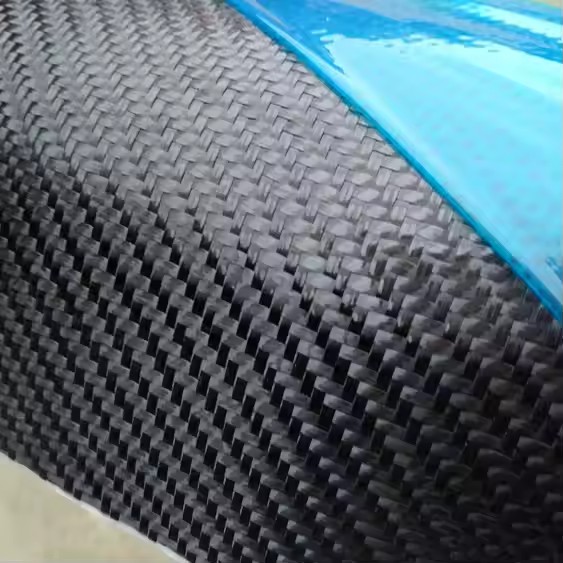
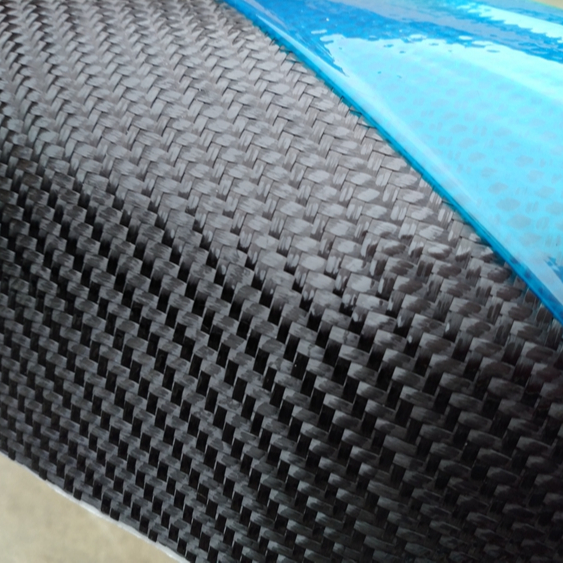
Prepreg (pre-impregnated) 3K 200g carbon fiber fabric comes with the matrix resin already impregnated into the fabric under controlled conditions in a factory setting. Impact Materials offers 200g Carbon Epoxy Twill Prepreg Appearance Fabric as a ready-to-process solution for customers who require the highest quality and most consistent mechanical properties. Prepreg processing eliminates the variability associated with wet layup, achieves fiber volume fractions of 58-62%, and requires autoclave or oven curing at elevated temperatures (typically 120-180 degrees Celsius depending on the resin system).
| Process | Fiber Volume | Production Volume | Surface Finish | Equipment Cost |
|---|---|---|---|---|
| Wet Layup (hand) | 40-50% | Low (prototyping) | Mold side good | Low |
| Vacuum Bagging | 50-55% | Low-Medium | Mold side good | Low-Medium |
| RTM | 55-60% | Medium-High | Both sides good | High |
| VARTM (Infusion) | 50-58% | Medium | Mold side good | Medium |
| Prepreg + Autoclave | 58-62% | Low-Medium | Excellent | High |
| Prepreg + Oven | 55-60% | Medium-High | Very Good | Medium-High |
Need a custom solution? Our technical experts are ready to help.
Sourcing Strategy: MOQ, Pricing, and Logistics
Effective sourcing of 3K 200g carbon fiber fabric requires understanding the cost drivers, negotiating appropriate order quantities, and planning logistics to minimize total landed cost. The following guidance is based on Impact Materials’ experience supplying composite materials to buyers across 120+ countries over two decades.
Order Volume and Pricing Tiers
Carbon fiber fabric pricing follows a volume-based tier structure common in specialty materials. While exact pricing depends on current raw material costs and market conditions, the following general framework applies:
- Sample orders (1-5 meters): Ordinarily charged at a premium rate plus shipping. Essential for material evaluation and qualification testing before committing to production volumes
- Small orders (10-100 meters): Specification commercial pricing, available from stock in most common specifications. Fit for prototyping and small production runs
- Medium orders (100-1,000 meters): Volume discount pricing applies, typically 5-15% below small order rates. Suitable for initial production and low-volume serial production
- Large orders (1,000+ meters): Contract pricing with the most favorable terms. Sources may offer custom specifications, dedicated production runs, and scheduled deliveries
Shipping and Logistics Considerations
Carbon fiber fabric is classified as non-hazardous material for shipping purposes, which simplifies international logistics compared to resin systems or prepreg (which require temperature-controlled shipping). However, proper packaging is essential to prevent moisture absorption and physical damage during transit. Standard packaging includes vacuum-sealed polyethylene bags with desiccant packs, placed in corrugated boxes or wooden crates for ocean freight. For air freight, lighter packaging can be used to reduce dimensional weight charges, though additional protective wrapping is suggested.
More 3K 200G Carbon Fiber Fabric Solutions
Discover additional 3K 200g carbon fiber fabric options to meet your specific project criteria.
Ready to Source Grade Composite Materials?
Impact Materials serves 120+ countries with 400+ product specifications. Get your custom quote in 24 hours.
Frequently Asked Questions
What is the difference between 3K and 6K carbon fiber fabric at 200g weight?
The primary difference lies in the tow size: 3K fabric uses 3,000-filament tows while 6K uses 6,000-filament tows. At the same 200g areal weight, 3K fabric will have more tows per inch (higher tow count) and therefore a tighter weave with finer visual texture. 6K fabric has fewer, thicker tows per inch, creating a coarser appearance. Mechanically, both can achieve similar fiber volume fractions in the cured laminate, but 3K fabric generally provides better surface finish and is preferred for visible cosmetic applications.
Can 3K 200g carbon fiber fabric be used for structural load-bearing applications?
Yes, 3K 200g carbon fiber fabric is suitable for structural applications when properly designed and processed. The key factor is achieving adequate laminate thickness through ply stacking. A typical structural laminate might require 8-16 plies of 200g fabric depending on the load case. For critical structural applications, autoclave-cured prepreg processing is recommended to achieve the highest and most consistent fiber volume fractions. Always verify mechanical properties through coupon testing according to ASTM standards for your specific resin system and processing conditions.
What resin systems are compatible with 3K 200g carbon fiber fabric?
3K 200g carbon fiber fabric is compatible with all major thermosetting resin systems including standard epoxy, high-temperature epoxy (service up to 180 degrees Celsius), vinyl ester, polyester, BMI (bismaleimide), and cyanate ester. Epoxy is the most commonly used resin due to its excellent adhesion to carbon fiber, high mechanical properties, and minimal shrinkage during cure. For marine applications, vinyl ester provides superior moisture resistance. Contact our technical team at https://www.ictmaterial.com/contact/#contactgetaquote for resin system recommendations tailored to your specific application.
How should 3K 200g carbon fiber fabric be stored to maintain quality?
Store fabric in its original vacuum-sealed packaging in a dry, temperature-controlled environment between 15-30 degrees Celsius with relative humidity below 70%. Once opened, fabric should be used within 30 days to prevent moisture absorption. For prepreg versions, strict cold chain management is required: store at -18 degrees Celsius and track cumulative out-time at room temperature against the resin system’s allowable limits.
What is the typical minimum order quantity and lead time for 3K 200g carbon fiber fabric?
Impact Materials maintains stock inventory of standard 3K 200g carbon fiber fabric in both plain weave and twill weave patterns. Stock orders of 1 roll (50-100 meters) can ship within 3-7 working days. For custom specifications or large volumes (500+ meters), typical lead time is 20-45 working days depending on production scheduling. Free sample kits are available for material evaluation.
How does 3K 200g carbon fiber compare to fiberglass in terms of cost and performance?
3K 200g carbon fiber delivers roughly 3-4 times the tensile strength and 2-3 times the stiffness of standard E-glass fabric at the same areal weight, but at a raw material cost 8-12 times higher. The cost premium is justified in weight-critical applications where the performance advantage enables design optimizations (thinner sections, fewer plies, less overall material usage) that partially offset the per-kilogram cost difference. For non-structural or moderately loaded applications where weight is not critical, fiberglass often provides better value.
[[ENDING_CTA]]
Work With a Trusted 3K 200G Carbon Fiber Fabric Supplier
Hangzhou Impact New Materials Co., Ltd. (Impact Materials) has delivered 3K 200g carbon fiber fabric solutions to clients in 120+ countries for over 20 years. Our 3,200+ successful projects and 400+ product specifications mean we have exactly what your project needs.